

How High Can They Go?
Good Day All!
Another big jump in mortgage rates occurred this past week. What does it all mean?
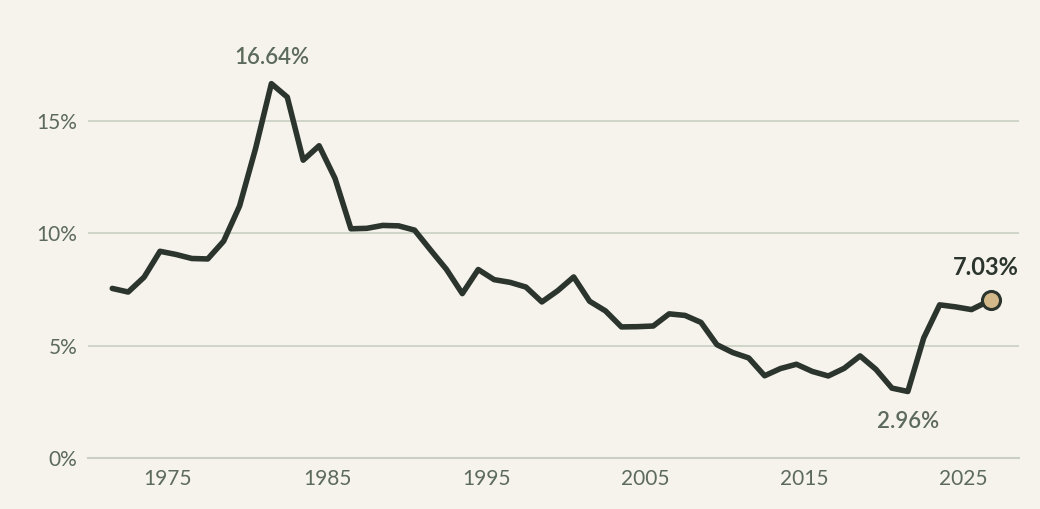
I'm probably the wrong guy to ask about the highs of mortgage rates because I know the answer. And that answer is not the one buyers or sellers want to hear. I lived, worked, and survived in various really bad economies. The first and worst as far as my involvement in the market was 16.06% (Freddie Mac) in 1982. One year previously, in 1981, the 30 year fixed mortgage rate averaged 16.64%, and it peaked at 18.63% that October, the all time high.
Higher diesel fuel prices will push freight and production costs higher and will affect a wide array of everyday products including groceries, household goods, and just about everything that relies on big trucks and diesel powered trains to move goods to consumers.
Can rates return to those early 1980s numbers? Yes, of course, but that is all contingent on the rate of inflation. The 1982 market had similarities to our current market, but it was not the rate of inflation. Not yet. In April of 1980, the Consumer Price Index (CPI) hit a high of 14.8%. Our inflation rate is currently about 11 points lower than that, at 3.4% in August. But there's pressure building. The Bureau of Labor Statistics points out that gasoline increased 27.4% from August 2025 to August 2026. Fuel oil, however, increased 52% for the same period. Diesel, currently, per Forbes is $6.23 per gallon, which was a 68% increase in just one year. I'm not an economist, but anyone who says that inflation won't keep rising if fuel prices don't come down is a liar, or greatly deluded.
The higher that mortgage rates go, the lower sellers will need to adjust their prices and to be realistic about the final price they would take. Veteran Realtors (like us) will tell you that most often, a seller's first offer is their best. And nowhere is that truer than in a market (economy) headed further south.
Back to Phoenix residential real estate. Mortgage rates are now in the mid 7% range and headed toward 8%. The local market has not yet experienced the brunt of hitting the 7% range, except that listings are rising, which is normal for the season, and there are more of them than one year ago. Listings under contract are down from last month, last quarter, last year and even two years ago. The Cromford Market Index, which measures the balance between supply and demand, continues to slide further into a "buyer's market."
The higher that mortgage rates go, the lower sellers will need to adjust their prices and to be realistic about the final price they would take. Veteran Realtors (like us) will tell you that most often, a seller's first offer is their best. And nowhere is that truer than in a market headed further south.
Judging by how peace talks are happening (or not) in the Middle East and Russia/Ukraine, it's difficult to see any quick change for the better in our market.
For all of us, I'd love to be wrong about this one.
Mike Bodeen has been analyzing the market and serving clients since 1976. This article first ran in Mike’s Monday Market Snapshot, the Bodeen Team weekly email.
