
But That Could Change Sooner Than Later
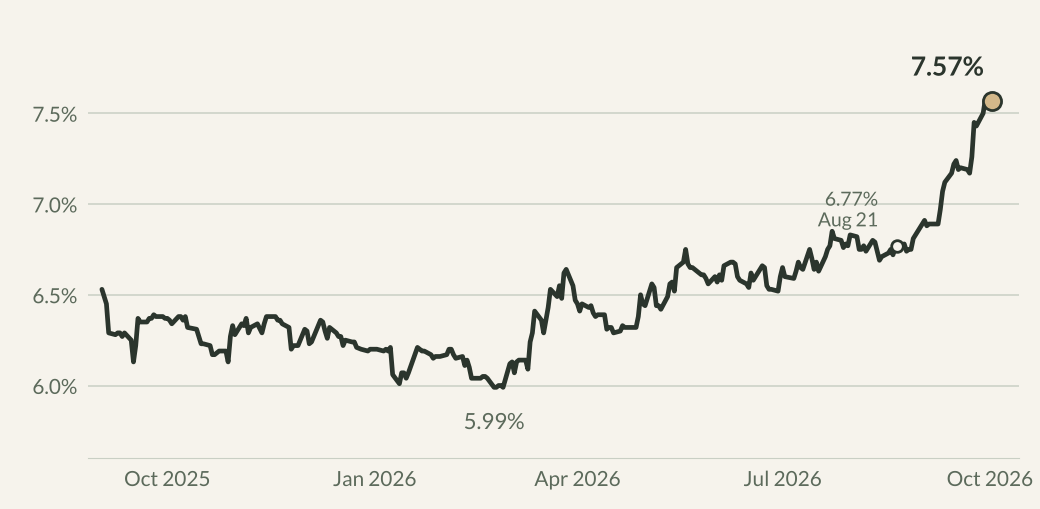
The Mideast war and the Strait of Hormuz closure have resulted in a severe lack of oil getting through the Gulf. This has contributed to a global lack of oil supply, which has added to (among other things) rising transportation costs, which are adding to inflationary pressures, which have in turn contributed to the rise of interest rates, and in our case, mortgage rates. Mortgage rates have risen a full one percent (1%) in the past 4 to 6 weeks and have shown no indication of retreat.
But there's an encouraging (hopeful) development regarding the reopening of the Strait of Hormuz via the U.S. Navy, and in a larger sense a war wearied foe (Iran) that is feeling the pain. The Wall Street Journal's editorial board seems to capture this. Read: The Battle of Hormuz Is Turning (WSJ). (Note: Unfortunately, there is a paywall here for nonsubscribers.)
The following quote from the WSJ Editorial Board captures my thought:
This is what progress looks like: Iran's oil is blocked while the world's oil increasingly gets through. The effect is to reduce pressure on the West and its Gulf allies while Iran must scrounge for money. The regime is rapidly running out of oil already on the sea from before or between blockades, though payments will have a longer lag. Treasury Secretary Scott Bessent estimates the Iranians will deliver the last of this oil to China in mid October.
(The Wall Street Journal Editorial Board, October 1, 2026)
Global, as well as national, politics directly affects our way of life. And in real estate the increasing inability to sell homes due to unaffordability continues to increase, and it was difficult before. If there's no real help, we'll see a greater increase from sellers struggling to avoid an increase in the foreclosure market. Some, perhaps most, sellers have sufficient equity, time and means to wait out our increasingly slowing market. But not everyone. It can take time to see a significant rate drop that will get buyers buying again.
Buyers who may have been holding off while rates were in the mid 6% range may now increase if and when rates drop back under the 7% range, believing that below 7% may be the best they'll get. Time will tell on that one. As always, inflation, and the threat of higher inflation, is what will determine the bond market direction, which will determine the mortgage market direction. But an end to the global oil crunch is a great start.
The bigger picture here is a growing possibility that there could be an end to the war altogether.
May it be so!
Mike Bodeen has been analyzing the market and serving clients since 1976. This article first ran in Mike’s Monday Market Snapshot, the Bodeen Team weekly email.
